


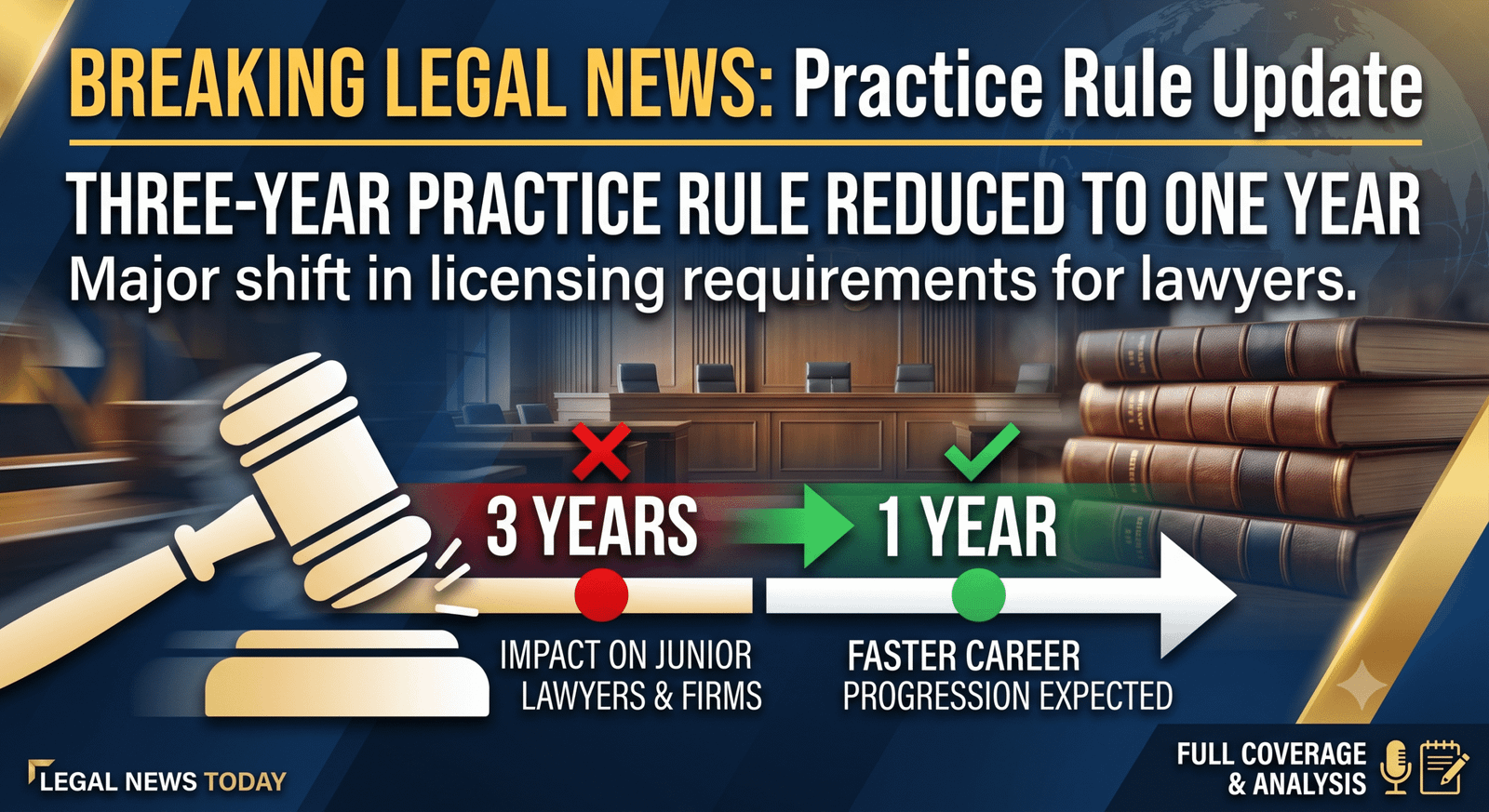
The Supreme Court modified its May 2025 ruling regarding judicial officer appointments, reducing the mandatory bar experience requirement from three years to one year while introducing structured post-selection training.
Core Changes and Requirements
- Experience Criteria: Starting April 1, 2027, applicants for the Civil Judge (Junior Division) examination must demonstrate at least one year of verified courtroom practice.
- Transition Relief (Until March 31, 2027): Law graduates applying during this interim window are exempt from producing a certificate of practice, as they will be legally deemed to satisfy the one-year prerequisite.
- Training and Clerkship Pipeline: All selected candidates—designated as Trainee Judicial Officers—must complete a mandatory two-year program comprising:
- One year of intensive instruction at a State Judicial Academy.
- Six months of judicial clerkship under a Principal District Judge or Higher Judicial Service officer.
- Six months of clerkship under a sitting High Court judge.
- Service Conditions: Trainees will receive a stipend equal to half the gross pay of a First Class Judicial Magistrate. Permanent field posting and standard pay scales will follow a favorable assessment from the supervising High Court judge.
Procedural Context and Dissent
The decision was delivered by a 2:1 majority comprising Chief Justice Surya Kant and Justice Augustine George Masih, while Justice K. Vinod Chandran dissented, favoring the original three-year bar experience requirement.
Review petitioners had argued that the initial mandate violated constitutional guarantees of equal opportunity (Articles 14 and 16), disadvantaged marginalized and lower-income candidates, and conflicted with historical Law Commission recommendations. High Courts are required to amend their recruitment regulations within three months to reflect the updated scheme, which will run on a five-year trial before further judicial review.
