

Close Menu

    Subscribe to Updates

    Get the latest creative news from FooBar about art, design and business.

    What's Hot

    DAS FILED A SUIT IN DELHI HIGH COURT OVER VIOLATION OF RIGHT TO PRIVACY

    August 21, 2026

    THREE YR PRACTICE RULE FOR JUDICIARY REDUCED TO ONE YEAR

    August 21, 2026

    Supreme Court Outlines Key Parameters for Evaluating Additional Evidence Under Order 41 Rule 27 CPC

    August 11, 2026
    Facebook X (Twitter) Instagram
    delhivakil.comdelhivakil.com
    • Home
    • Blogs
    • Latest Legal News
    • Law College
    • Legal Jobs
    • LEGAL NEWS
    Subscribe
    delhivakil.comdelhivakil.com
    Home»Latest Legal News»Supreme Court Urges States to Classify Cancer as a Notifiable Disease
    Latest Legal News

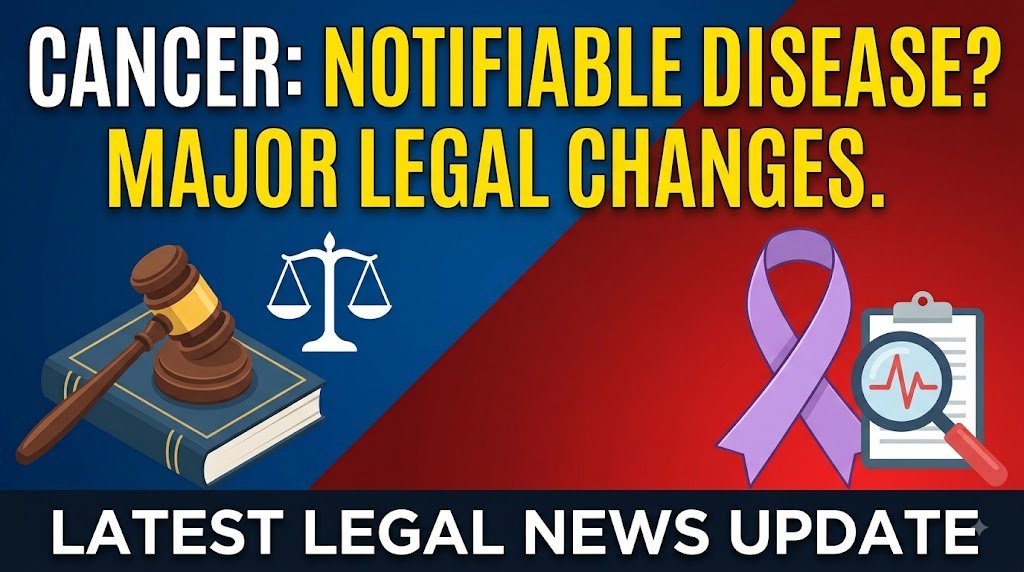
    Supreme Court Urges States to Classify Cancer as a Notifiable Disease

    delhivakilBy delhivakilAugust 11, 2026No Comments2 Mins Read
    Share Facebook Twitter Pinterest LinkedIn Tumblr Reddit Telegram Email
    Share
    Facebook Twitter LinkedIn Pinterest Email

    On Tuesday, the Supreme Court of India advised States and Union Territories (UTs) that have not yet labeled cancer a “notifiable disease” to consider making the change. During the hearing of a Public Interest Litigation, a bench led by Chief Justice Surya Kant, alongside Justices Joymalya Bagchi and V Mohana, highlighted the need for a standardized national framework for reporting cancer cases.

    The Push for a Uniform Policy

    The Chief Justice questioned the Union Government on why mandatory national guidelines couldn’t be established to ensure consistency. In response, Additional Solicitor General Anil Kaushik explained that healthcare falls under state jurisdiction, though he confirmed that 17 States and UTs have already made the classification. The Court directed the remaining regions to review the matter and submit compliance affidavits.

    Addressing Undercounted Fatalities

    The Court’s directive aligns with the 139th Report from the Parliamentary Standing Committee on Health and Family Welfare. The committee discovered that the lack of mandatory reporting leads to significant undercounting of cancer-related deaths, as fatalities are frequently misclassified as general issues like cardio-respiratory failure. Backing a proposal from the Tata Memorial Centre, the committee stressed that legally mandating the reporting of cancer cases would ensure accurate government tracking.

    Benefits of Mandatory Reporting

    Creating a robust, national database would provide healthcare authorities with a highly accurate picture of the disease’s prevalence. This data would be instrumental in:

    • Analyzing demographic risk factors.
    • Designing and implementing effective public screening programs.
    • Efficiently allocating medical resources and funding.

    To manage this, the committee also suggested developing a real-time web platform—similar to the CoWIN system—to handle cancer registration, data collection, and patient counseling.

    Redefining “Notifiable Diseases”

    Typically, the “notifiable” label is reserved for infectious illnesses like tuberculosis or dengue, legally compelling healthcare providers to report outbreaks to monitor public health. While cancer is non-communicable, the parliamentary committee argued that mandatory reporting is just as crucial here. Legally requiring all healthcare facilities to report diagnoses and fatalities is the only way to build a comprehensive and accurate national cancer registry.

    Share. Facebook Twitter Pinterest LinkedIn Tumblr Email
    Previous ArticleHigh Court Affirms State Liability for Manual Scavenging Deaths
    Next Article Supreme Court Outlines Key Parameters for Evaluating Additional Evidence Under Order 41 Rule 27 CPC
    delhivakil

    Related Posts

    Latest Legal News

    DAS FILED A SUIT IN DELHI HIGH COURT OVER VIOLATION OF RIGHT TO PRIVACY

    August 21, 2026
    Latest Legal News

    THREE YR PRACTICE RULE FOR JUDICIARY REDUCED TO ONE YEAR

    August 21, 2026
    Latest Legal News

    Supreme Court Outlines Key Parameters for Evaluating Additional Evidence Under Order 41 Rule 27 CPC

    August 11, 2026
    Add A Comment
    Leave A Reply Cancel Reply

    Demo
    Top Posts

    Supreme Court Urges States to Classify Cancer as a Notifiable Disease

    August 11, 2026203 Views

    DAS FILED A SUIT IN DELHI HIGH COURT OVER VIOLATION OF RIGHT TO PRIVACY

    August 21, 2026201 Views

    THREE YR PRACTICE RULE FOR JUDICIARY REDUCED TO ONE YEAR

    August 21, 2026201 Views
    Stay In Touch
    • Facebook
    • YouTube
    • TikTok
    • WhatsApp
    • Twitter
    • Instagram
    Latest Reviews
    85
    Blogs

    Human Rights in India: Protection, Challenges, and Legal Framework

    info.readycoder@gmail.comJanuary 15, 2021
    8.1
    Uncategorized

    Property Laws in India: Ownership, Inheritance, and Transfer

    info.readycoder@gmail.comJanuary 15, 2021
    8.9
    Law College

    Amity Law School, Noida

    info.readycoder@gmail.comJanuary 15, 2021

    Subscribe to Updates

    Get the latest tech news from FooBar about tech, design and biz.

    Demo
    Most Popular

    Supreme Court Urges States to Classify Cancer as a Notifiable Disease

    August 11, 2026203 Views

    DAS FILED A SUIT IN DELHI HIGH COURT OVER VIOLATION OF RIGHT TO PRIVACY

    August 21, 2026201 Views

    THREE YR PRACTICE RULE FOR JUDICIARY REDUCED TO ONE YEAR

    August 21, 2026201 Views
    Our Picks

    DAS FILED A SUIT IN DELHI HIGH COURT OVER VIOLATION OF RIGHT TO PRIVACY

    August 21, 2026

    THREE YR PRACTICE RULE FOR JUDICIARY REDUCED TO ONE YEAR

    August 21, 2026

    Supreme Court Outlines Key Parameters for Evaluating Additional Evidence Under Order 41 Rule 27 CPC

    August 11, 2026

    Subscribe to Updates

    Get the latest creative news from FooBar about art, design and business.

    Type above and press Enter to search. Press Esc to cancel.